Showing posts with label british noir. Show all posts

Sunday, June 21, 2026

Ted Lewis - Jack's Return Home (Get Carter)


English gangster stories are well known, from modern works such as Gangs of London to Gerald Kersh's Night and the City. However, Ted Lewis's Jack's Return Home, later adapted into the film Get Carter, stands as one of the most important British gangster noir novels.

The novel features one of the most striking openings in crime fiction. Jack Carter returns to his hometown following the death of his brother Frank, and this homecoming immediately triggers a flood of childhood memories. The motif of arriving in a town is hardly new, but Lewis employs it with remarkable skill. The first-person narration feels authentic and convincing, giving the reader the sense of rediscovering the town and its inhabitants alongside Carter.

The entire novel unfolds at a slow-burn pace. Gangster violence, threats, and confrontations alternate with recollections of Carter's childhood, memories of his brother, and almost poetic observations of everyday life in northern England. The past constantly intrudes upon the present, giving the novel a melancholy quality that distinguishes it from many American hard-boiled crime novels.

Lewis also makes effective use of retardation, or the deliberate postponement of narrative resolution. The mystery surrounding Frank's murder is not revealed all at once but gradually unfolds through a series of encounters, conversations, and conflicts. Foreshadowing is present throughout, creating an atmosphere in which the reader senses from the very beginning that something dangerous lurks beneath the surface of every exchange.

Particularly impressive is the novel's depiction of English social deprivation. Industrial towns, alcohol, crime, and a pervasive sense of social decline are not merely a backdrop but an integral part of the story itself. The characters are not simple gangster-fiction stereotypes; they possess their own histories, flaws, and motivations, making them feel fully human.

Jack's Return Home is more than a story of crime and revenge. It is a novel about returning to the past, about a town that shapes its inhabitants, and about a man who, in his search for the truth behind his brother's death, sinks ever deeper into a world he once tried to escape.

Thursday, December 25, 2025

Gerald Kersh - Night And The City


Gerald Kersh (1912–1968) was an English writer of novels and short stories, partially famous during his lifetime but oddly forgotten and neglected after his death in poverty. In his youth, he held a variety of strange jobs, including working as a wrestler, which brought him into close contact with the London underworld. In his own words, the novels he had published up to that point “hadn’t really been fiction at all” and “contained an irreducible minimum of made-up stuff.”

During the Second World War, Kersh was severely injured during the Blitz — at one point he was buried alive three times — an experience that left him partially disabled. After the war, he moved to the United States, where he began writing articles as well as horror, science-fiction, detective stories, and novels, gaining recognition in both the USA and the UK.

Harlan Ellison later stated that Kersh was his favorite author. Writing to a fan, Ellison recommended Kersh by saying: “You will find yourself in the presence of a talent so immense and compelling that you will understand how grateful and humble I felt merely to have been permitted to associate myself with his name as editor.” Anthony Boucher likewise noted that Kersh was “incapable of writing a dull sentence.”

Today, Kersh is remembered (amongst others) for his novel Night and the City (loosely adapted into a film noir by Jules Dassin), which prompted me to write about it here — because I have rarely encountered a novel so relentlessly depressing and filthy, populated by characters so thoroughly rotten. Luckily, publisher London Books Classics reissued recently Night and the City with fine introduction by John King.

I expected some relatively easy noir reading, in the vein of David Goodis, but that was not the case here. Instead, the narrator throws us directly into the seedy world of London’s petty criminals and prostitutes, with Harry Fabian at its center — a figure so morally bankrupt that it is difficult to feel any sympathy for him.

Harry lives off his girlfriend Zoe, who prostitutes herself, and in one of the novel’s most unsettling episodes he stalks one of her customers, a lonely man whose wife is dying of cancer. After following him for some time, Harry finally confronts him in a Turkish bath and discovers documents in his coat revealing where he lives. He then visits the man’s home and blackmails him, demanding one hundred pounds in exchange for keeping his secret from his sick wife. The man can only produce fifty pounds, which Harry grudgingly accepts — enough, for the moment, to keep his schemes alive.

These schemes revolve around Harry’s attempt to establish a wrestling business, a venture driven more by desperation than by any real competence. Kersh’s sentences are long and dense, carefully describing each character while offering sharp, often merciless observations about human nature.

Alongside Harry, there is Vi, who works for the nightclub owner Nosseross, and her friend Helen. Vi persuades Helen — who initially appears innocent — to take a job at the nightclub. There is also Adam, perhaps the only genuinely decent character in the novel, who falls in love with Helen and reluctantly accepts work in the same corrupt environment.

Fabian, however, proves incapable of restraint. He quickly squanders the money he has obtained and is soon forced to look for more. One of the novel’s most tragic figures is the once-great wrestler Ali The Turk, an aging man who still believes he can fight one last battle despite his failing heart. Adam warns Fabian that the match may kill him, but Fabian ignores the warning. Ali wins the bout — and dies shortly afterward from a heart attack. I found this moment genuinely moving and deeply sad.

There is also Bert, Fabian’s brother, a hardworking fruit seller who repeatedly tries to pull Harry back from his downward spiral. In the end, Fabian is pursued by a deranged wrestler, recklessly gambles away what little money he has left, and is finally arrested after Zoe informs the police of his exploitation.

The only character who escapes this world with any dignity is Adam, who leaves the nightclub scene behind to pursue his true calling as a sculptor.

When compared to American noir writers such as James M. Cain, David Goodis, or Jim Thompson, Gerald Kersh feels markedly different. American noir, even at its darkest, often relies on speed, compression, and a certain brutal efficiency. The novels are short, the plots tight, and the prose stripped down to the bone. Kersh, on the other hand, allows his narrative to sprawl. He lingers over descriptions, moral observations, and the psychological decay of his characters.

Where Cain or Thompson often place us directly inside the mind of the criminal, Kersh keeps a certain distance, using an omniscient narrator who judges, observes, and exposes. This makes Night and the City less immediately gripping than many American noirs, but also more suffocating. There is no quick escape, no sharp punchline — only the slow accumulation of misery.

In Night and the City, the night is not merely a setting but a moral condition. Darkness does not simply cover London; it reveals it. The characters come alive only after sunset, when the city allows them to become what they truly are. When morning arrives, it brings no redemption — only anxiety, exhaustion, and the dread of returning to work and survival.

Fabian is not destroyed solely by society or circumstance but by his own nature. Kersh makes it clear that this is not a novel about an innocent man crushed by the system. Fabian is greedy, parasitic, and incapable of self-restraint. The city merely provides the stage on which his weaknesses are exposed. In this sense, Night and the City is less a crime novel than a study of self-destruction, one in which the night does not create monsters, but simply gives them room to move.

Tuesday, February 25, 2025

Patrick Hamilton - Hangover Square


Hangover Square is one of those novels that leaves you with a lingering sense of unease long after you’ve turned the last page. Written by Patrick Hamilton and first published in 1941, this dark and atmospheric work blends psychological tension with the gritty, post-Victorian streets of London. It’s a compelling piece of fiction that digs deep into the human psyche, making it a unique read for those who enjoy the darker side of crime fiction.

Plot Overview

At the heart of Hangover Square is George, a lonely and troubled man living in London in the years leading up to World War II. He’s not your typical protagonist: a deeply complex, often self-destructive figure, George battles internal demons, including a strained relationship with his own identity, alcoholism, and an obsession with a woman named Netta. His struggles create a gripping portrait of inner turmoil, a stark departure from the usual fast-paced plots of crime fiction.

The story is told with an unsettling intimacy, as we watch George’s downward spiral in his search for love, belonging, and escape. The novel shifts back and forth between George’s relatively peaceful moments and the manic, darker side of his mind, all while London itself looms as a backdrop—an ominous, almost hostile cityscape that reflects George's state of mind.

Psychological Depth and Atmosphere

What makes Hangover Square stand out, especially for crime fiction readers, is its psychological complexity. The novel may not fit neatly into the crime genre, but it shares similar themes of moral ambiguity, mental instability, and the darker undercurrents of human nature. George’s mind becomes both his prison and his battleground, and Hamilton’s writing pulls you into that turmoil, leaving you questioning the reliability of George’s perceptions. The novel’s slow burn of tension, the sense of inevitable tragedy, makes it feel almost like a psychological thriller rather than a traditional crime novel.

Hamilton’s portrayal of London in the 1930s is equally as bleak as George’s inner world. The atmosphere is heavy, and it often feels as though the city itself is a character, influencing the choices George makes. The novel’s pacing can feel slow at times, especially when Hamilton spends long stretches diving into George’s tortured thoughts, but it’s this very depth that creates a lasting impression of desperation and isolation.

Themes of Love, Obsession, and Self-Destruction

At its core, Hangover Square is a novel about obsession—specifically George’s obsessive and unhealthy fixation on Netta. This relationship is as toxic as it is compelling, making it one of the driving forces behind George’s descent into madness. For fans of crime fiction, this theme will resonate, as it mirrors the complex and often destructive dynamics we see in noir protagonists and their struggles with desire, self-worth, and moral conflict.

While the novel may not feature a conventional crime plot, it explores the crime of the human mind—how obsession, jealousy, and desperation can lead to irreversible consequences. The psychological toll George experiences, paired with his interactions with others, takes the reader into darker territory than a typical whodunit.

Final Thoughts

Hangover Square may not be for everyone, especially for readers who prefer fast-paced action or straightforward crime plots. The novel’s psychological intricacies and pacing require patience, but for those who appreciate a deep dive into the complexities of the human mind, it offers a uniquely haunting experience. The story’s exploration of mental illness, love, and obsession will appeal to fans of crime fiction who enjoy psychological tension as much as the more traditional aspects of the genre.

If you’re someone who appreciates the darker, more introspective side of crime stories and enjoys a slow-burning narrative, Hangover Square is definitely worth the read. It’s a reminder that sometimes the most chilling crimes happen not in the streets, but within the very minds of the people we least expect. Hamilton also wrote script for famous movie Gaslight.

Friday, November 19, 2021

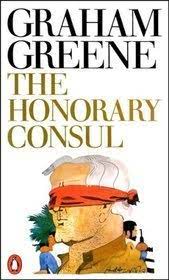
Graham Greene - The Honorary Consul


Graham Greene was very good writer who also wrote couple of crime novels. You may remember movie Third Man and a couple of others. This particular thriller is very exciting, telling a story about doctor in south america entangled in political turmoil.

Harry Stephen Keeler - Sing Sing Nights

Harry Stephen Keeler's Sing Sing Nights is one of his most unusual books. The premise is highly implausible, yet it perfectly reflects ...